
Almost every first paid day on a film set is background work. It goes by several names — supporting artist, extra, background actor, atmosphere — and it is the part of the industry with the lowest barrier and the least glamour attached to it, which is exactly why it is useful.
You will be paid, you will spend a long day watching how a set actually runs, and you will learn more about the machinery in one shift than in a term of classes. What it is not is a shortcut to speaking parts, and it is worth being clear about that from the start.
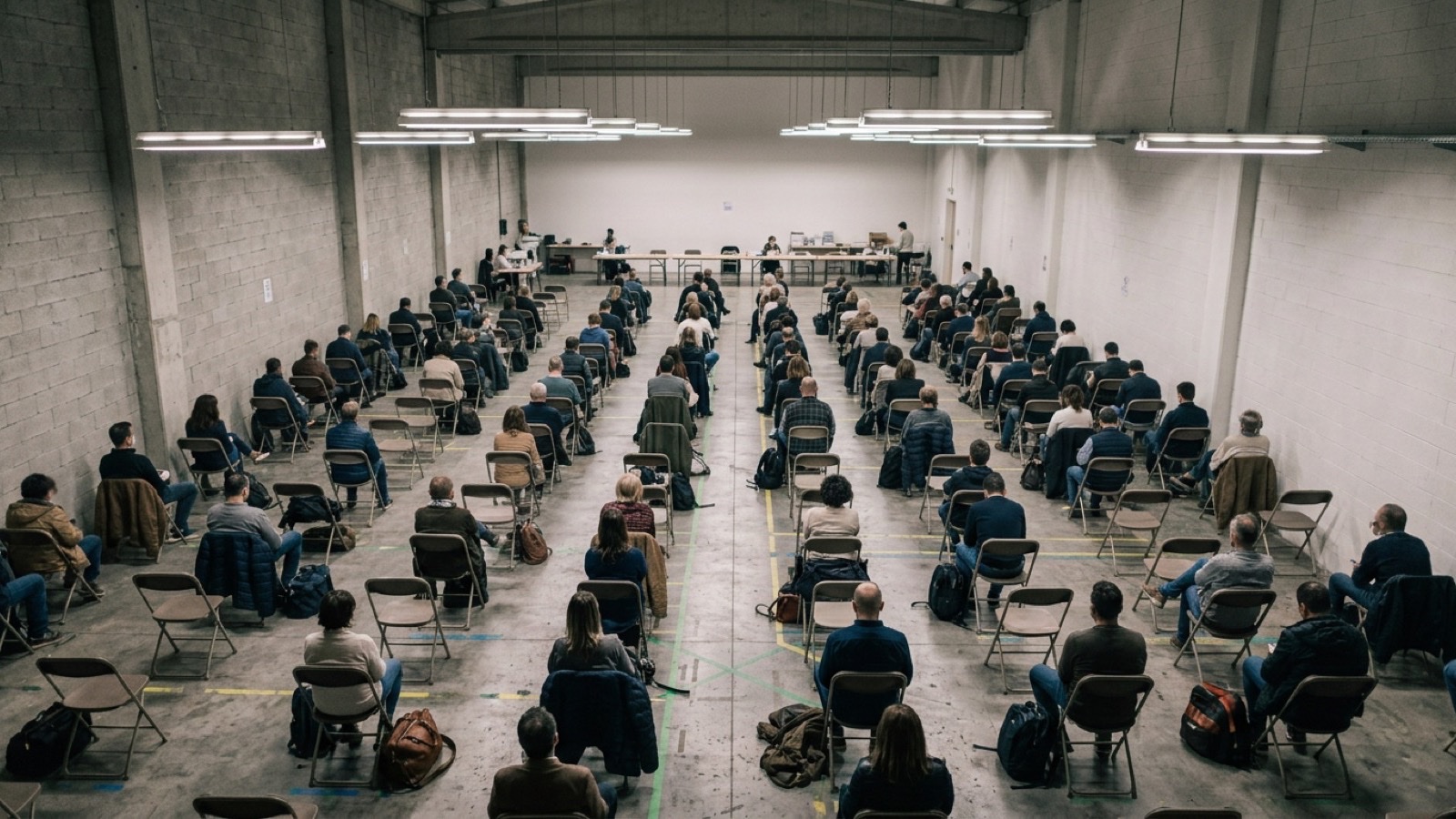 Most of the day happens in this room.
What the job actually is
You populate the world. A street has people walking down it, a restaurant has diners, an office has staff. Your work is to be convincingly ordinary and to do the same thing identically every time the scene is shot, so the edit matches.
That repetition is the skill. If you walked past the window carrying a bag in your left hand on the first take, you do exactly that on the ninth. Directors do not remember background performers who improvised; they remember the ones who did not need resetting.
How the work is booked
Background casting is usually handled by specialist agencies and casting offices rather than by the production directly, and increasingly through open listings.
- Registration is free. Background agencies earn commission on what you are paid. One that charges you to join is selling something else.
- Current photographs matter and they want you, not a styled version: they are matching period, age range and look to a scene.
- Your measurements are used for costume before you arrive, so accuracy prevents an expensive morning.
- Availability is the real currency. Bookings often come with a day or two of notice, and people who answer get used again.
- Skills and assets get you upgraded — driving, a period-appropriate car, horse riding, dance, a uniform you legitimately own, a language.
The day
Long. Call times are early, days routinely run ten or twelve hours, and most of that is waiting in a holding area between short bursts of work.
- Bring something to occupy you that is silent and portable, plus a charger.
- Bring your own clothing options if the brief asked for them, clean and in the colours requested.
- Costume and continuity will dress you or approve what you brought, and photograph you so you can be matched on later days.
- Phones away on set and no photographs anywhere. Background performers lose the booking over this more than anything else.
- Eat when catering opens. The gap between meals can be long.
On set, take direction from the assistant directors, keep your eyeline away from the camera and away from the lead actors, and never speak audibly unless you have been asked to — background dialogue is usually mimed so it does not foul the sound recording.
What it pays, and how
Rates vary enormously by country and by whether the production works under a union or collective agreement, so no figure written here would be true for long. The structure, though, is consistent and worth knowing.
- A basic day rate covering an agreed number of hours.
- Overtime beyond that, usually at a higher rate and in defined increments.
- Supplements for specific things: wearing your own suit, getting wet, working nights, a haircut, a costume fitting on another day.
- Travel and parking sometimes covered, often not.
- Agency commission deducted from what you earned, never charged upfront.
Ask what the day rate covers and when the invoice is settled, because sixty days is common and surprises nobody who asked first.
 Your measurements were used before you arrived.
Does it lead to speaking roles?
Honestly, rarely, and not by the route people imagine. Being noticed by a director and promoted on the day happens, but it is a story precisely because it is uncommon, and pursuing it actively is the fastest way to be remembered badly.
What it does lead to is more real. You learn the vocabulary and the rhythm of a set, so when you do get a speaking role you are not spending your first hour working out where to stand. You meet assistant directors and background coordinators who book constantly. You build a record of reliability that other people will vouch for. And you get paid while doing it, which is more than most routes into this industry offer.
Two things worth protecting
Background work is legitimate and widespread, but the volume of it attracts the usual edges.
- Nobody charges you to be registered as background. Not for a listing, not for a database, not for mandatory photographs.
- The brief should name the production or at least the type of production, the date, the location, the hours and the rate. A call with none of that is not a booking.
Where CastHub sits
Productions, agencies and brands publish castings here, including background and supporting artist calls, and talent applies directly. Applying is free. Every application carries a visible state — applied, shortlisted, invited, then selected or not — which matters more in background work than anywhere else, because the volume is high and silence is otherwise total.
We are not an agency. We do not represent you, we do not negotiate for you, and we take no percentage of what you are paid. The booking and its terms are between you and the company that made it.